A.C. Wise’s “With Tales in Their Teeth, From the Mountain They Came” is a tale of words, or rather the pain caused from the lack of them and the healing that can come from surrounding oneself with words, written and more importantly spoken. When Alba’s lover dies in the war she leaves their home by the sea and goes up the mountain to the Library, becoming an Acolyte in service of the mysterious Librarians. Lost in the silence of the library the words pile up inside Alba until she can no longer contain them and as she speaks into the silence, Alba, and the world around her, begins to transform. A beautiful story, celebrating words.
When I first read this story back in the January 2013 issue of Lightspeed I was taken by how much the theme of words and their importance resonated with me as a reader and as a writer (albeit only of blog posts); it also struck me as a short story that encapsulates the reasons why I host an annual reading event focused on fantasy, folklore, mythology and fairy tales. When that became apparent I knew that it would be a story I wanted to share come Spring. Although thick snow blankets every surface outside my front door, the melancholy beauty of this story ignites a passion for the season of new beginnings, celebrating once again the power of the written word shared with others.
I strongly encourage you to go read ““With Tales in their Teeth, From the Mountain They Came” and then come join us for a spoiler-laden discussion following the break. Sharing it is my gift to those who also revel in the importance of words.
She woke with the words I love you on her tongue, speaking them aloud to an empty room.
I was hooked by the opening line the first time I read this story and I noticed on this subsequent read just how much it actually says in relation to the rest of the story, its significance being that she spoke the words aloud. In her author spotlight Wise points out that, despite how cheesy it sounds, the words came to her in a dream. It is a statement that sounds too precious to be true and yet this is just the kind of thing I expect writers to wake up with, poetic words lingering on the heels of an already fading dream. One of the most beautiful things about A.C. Wise’s story is the sheer variety of sentences that are things of beauty all by themselves and yet taken in context with the story are weighted down with meaning. This was the first story of hers that I read and I was, and still remain, most impressed.
I suspect “With Tales” is one of those stories in which more than one theme exists in the writer’s mind and wherein the reader can find several threads of personal meaning. For me the power of words, both written and spoken, stand out. The story not only manages to champion just how important words are but also contrasts the significance of words both written and spoken while, in my opinion, not choosing one as more important than the other.
Certainly spoken words, and those remaining unspoken, are a prominent part of our protagonist’s life. Alba and her lover exists on opposite ends of the spectrum, with Alba holding all her words inside while he freely speaks the words that are important to him. This is shown with great clarity in the brief time that the two characters are together. Not only does he share his love verbally with Alba, but he shares the words written about the war with her by reading them aloud. These words are of such import to him that he would not dare keep them to himself. Once again Wise’s words are so powerful:
His love was vast; it encompassed strangers, dying in fields he’d never seen. He went to War. Her love was small, and encompassed only him. She stayed behind.
From the very start we see the contrast between Alba and the man she loved. He embraced words and words had major significance in his life. He expressed his love for her in words; he gave her space to have her words come in time; he devoured words about the war and shared those words aloud with her; those words took hold and led him off to war. She held her words inside, not daring to speak them aloud. It is interesting that, in his death, she chose to find a place “where she could drown herself in [words]” as a result of her grief and loneliness.
When she gets to the Library the reader is once again reminded of the importance of words. She is give a name, a word, and one with significance to her: “Alba”, meaning “dawn”. The story has been heavy with sadness and pain to this point and with this one nugget, easy to move past while wondering what will happen next, both the reader and the newly christened Alba are given hope.
Those fond of libraries were no doubt salivating as I was with the description of what Alba saw in the Main Hall, it being “filled with floor to ceiling shelves, wooden leviathans lit by tall, narrow windows“. At once the Library appears that it could be a place of healing but could also be a place where one loses themselves. We certainly see that in the behavior of the Acolytes and Novices, how they wrap themselves in silence while being surrounded by words. It is a situation that accurately reflects they way in which Alba was living prior to coming to the Library and she slowly begins to come to the realization that nothing has changed. She is still the same woman who is keeping her words inside to great detriment to herself.
As Alba begins to question what is happening, courtesy of books disappearing from her section of the Library, we see sparks of boldness ignite within her. She begins to rebel against the rules that appear to be in place in the Library and in so doing is rebelling against that part of her nature that has kept her silent for so long.
Silence had cost her everything once. She needed words, needed to give them voice, and let them fill the raw corners of her being, leaving no room for regret.
It may be reading more into the story than exists, but I find it significant that even though Eleuthere is a key player in Alba’s transformation, it is Alba’s boldness and willingness to speak aloud, to ask questions, and to not let go of Eleuthere that puts her on the path to change. At the beginning of the story Alba appears as a weak character, unable to even articulate what she feels and perhaps not even able to commit to any feelings. It would not have been out of character to see a person like this react to grief by further and further retreat from the world, with regret piling on top of regret. I appreciate that Wise instead allows Alba to be pushed by her grief and loss to a breaking point from which she chooses a course of action, rather than inaction. It is interesting that as this change happens, Alba is aware, painfully aware, of what it may mean to now speak out:
What right did she have to call words to her defense now?
Of course she would feel that way!
For me the story never shifts away from the focus on the importance of written and spoken words but I do want to also acknowledge the war element of the story. I admire the way in which Wise does not shy away from the devastation of war while at the same time presenting the horrors in a non-judgmental manner. I have always wondered about book burning and what would cause a person to feel this was a justified act and while I don’t believe Wise is making excuse for that as a part of war, I do find this a very thought-provoking idea.
You go to war for an ideal, an idea, and it breaks you. You come back a ghost, haunted, dreaming of flame. You come back sick, hating ideas. What are books but ideas? You start to believe if you burn them, it will stop the pain.
Eleuthere was aware, via the Librarians, that the Library would again burn and once Alba is aware she cannot sit idly by and do nothing. Alba has already lived through her own personal horror over lost words and her call to action brings life and purpose to all of the rest of the people who have made their way to the Library only to remain entombed in their own silence and grief. Their purpose is to save the words at all costs, even giving purpose to the dead in doing so.
“With Teeth” is not an easy story in that it is one that very plainly sets its gaze on the grief and pain and tragedy that are a part of life. The reason it is so effective as a story is that it takes little imagination on the part of the reader to empathize with Alba as we have all been witness to and/or participants in similar pain. We have all dealt with loss and we most certainly have all went through periods where we agonized over words unspoken as well as over words spoken; wishing we had just had the courage to say what we felt or the discernment to hold back hurtful words. It is a sad story but it is also one of great beauty and ultimately hope. I could attempt to wax poetic (and certainly have in the past) about the importance of story and the importance of words both written and spoken. In doing so I would not do near the justice I would hope to this story or to that idea. I’m not sure I have to though as I believe you all understand. You’ve experienced it yourself. It is the reason you read. It is the reason those of you who blog write. It is the reason that we look back over the course of our lives and hope to see growth and maturity in the way in which we communicate with one another and is the fuel that propels us to strive to be wiser about the words we read and say and those we do not. To not idly waste our words nor to miss the opportunity for our words to be the light that shines in the dark hours of those around us.
They joined the parade of mad women and men flowing down the Mountain, carrying words, an unstoppable tide to drown in beauty the world.
I don’t find that sentiment cheesy at all. I want to be a part of that parade. Words are important. Books are important. Our stories–those real and made up–are important. As Wise writes:
“They were worth speaking; they were worth saving”
I hope you enjoyed this week’s short story collection. Please share your thoughts. I would also encourage you to visit the Author Spotlight to read a few of Wise’s thoughts on this story and its inspirations.
______________________________________________________________
The story for next Sunday’s discussion is “Purity Test” by Kristine Kathryn Rusch.
Kristine Kathyrn Rusch has become for me a name synonymous with good story telling. While the quality of any author’s work various from creation to creation I have yet to be disappointed with Rusch’s offerings and “Purity Test” is no exception. This short story, that feels as if it is nestled in the same woods in which a beauty slept and a girl with long hair was held captive, is the first fairy tale I’ve read from the author. It reminds me strongly of the work of Angela Carter in the The Bloody Chamber collection. “Purity Test” is woven from a tapestry of familiar stories, shot through with a thread of ever-darkening suspense that makes for a satisfying read. A rewarding story that satisfies while leaving the reader wanting more.
You can read it for free by clicking here.
_____________________________________
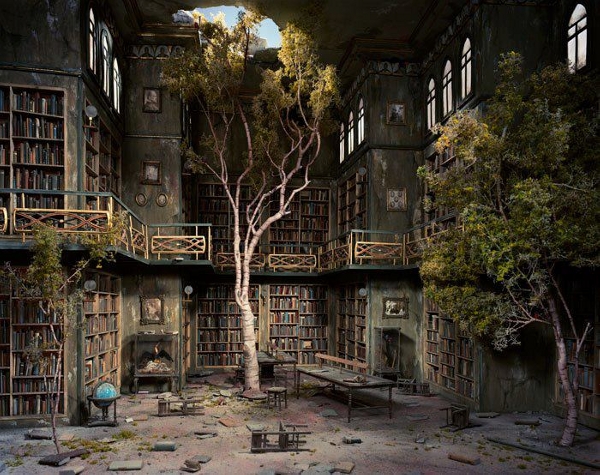
*If anyone knows the creator of the featured image, please let me know. I would love to give proper credit. Thanks Christian for the answer!
you know i’m not the best at short stories (and having found the sci fi one that i love) I will just say this: I love the photo you used! :o) (all that writing and she loves the photo!..headdrop on keyboard! lol)
Hey, it is an amazing photo, so I completely understand! I do think there is a possibility that you would like this one though.
Well, you already know that I love this story. And I *adore* this post! You are so much better than I at using words to express what both your heart and mind feel. Oh sure, I use them plenty…I’m just not as good at finding the ones that could best portray what’s in my heart and mind.
There was comment left after the story, that I really loved too…it said something about how the story started out small and morphed into something much bigger. That’s how I felt about it too. I was drawn immediately into the intimacy of Alba’s small world, and while I’m not generally to hold my words in with those I’m most close to, I still found it so easy to understand her, to relate to her, to hurt for her.
In fact, I think my favorite quote from the whole story is the one you posted, “His love was vast; it encompassed…” I must have read that 5 or 6 times before moving on. It just touched me so deeply.
Yet the immediate painful intimacy that captured my heart…well, damn if Wise didn’t manage to turn it into one of the most hopeful stories I’ve ever read.
And yeah, I’m totally with you–I don’t find “They joined the parade…” cheesy at all. I found it an incredibly powerful image that has lingered in my mind since I read the story a few days ago.
Thank you for sharing this story, Carl. 🙂
It was easy to hurt for/with Alba, I think because her story was about something we’ve all experienced, not saying things we wished we could express. You are right, the story starts out with a very intimate approach and does morph into something beyond Alba. Great point. The story does get bigger as Alba stops being solely introspective about her loss and begins to see the bigger picture and chooses to do something to impact that.
I’m so happy you read this one. As I said in the email you were one of the people who popped into my mind when I first read this. It was a pleasure to share it with you.
What an odd and fascinating story! I’m reminded (probably inevitably) of Farenheit 451, though I think there’s a crucial difference in that 451 is about silencing from without, and this story is about silencing from within. Very thought-provoking.
And I have to agree with Deslily above…what an amazing picture!
If you haven’t, you should read the Author Spotlight. You’ll see that the Bradbury feelings are right on target!
I agree that it is a very thought-provoking story. I read it back at the start of January and continue to think about it often.
I really enjoyed this story. It’s my favorite of your Sunday posts so far.
First off I’m not going to sit her a let you be little the writing of your blog posts. Just because your blog may be an unpaid gig you do for fun I can guarenttee it read by more than readers than a lot of paid so called professional sites and dead tree news papers. The fact is your writing is top notch driven by the passion you have for your subject material. Now that we can get past you downgrading your writing lets get to the story.
I will echo deslilly in saying that I love the opening image although its not one I pictured while reading this story. It rocks none the less.
I will say that I connect more with the idea of stories than books themselves. I completely agree on the importance of words and /or ideas wether spoken or unspoken. I don’t need the story’s to be in books so much it the story itself no matter what the format I find critical that we connect with other people through the words and ideas. I love the spoken word story as much as a book.
I can sympathize with Alba and the beginning of the tale as she loses her lover. I love seeing her grow from this loss though instead of crumble from it. I find that as I get older I’m better to just say what is on my mind more so than when I was younger. I try to keep in mind that this world is cruel and unfair and each day may be last at any unknown moment like Albas husband. It’s better to get your thouts out there rather than stifle them unspoken.
Elements of the story which are interesting are the ideas of bodies being used as books. I couldn’t see how they perserved them though from decay. The idea makes for a nice creepy element no matter what which would look great on film. I fact this story would make for a cool visual half hour episode of the twilight zone.
I loved the idea of the Libriarians running down the mountain acting like bad ass warriors even though they aren’t really going to war. It’s just the idea of tough Libriarians which is both cool and funny at the same time. Cn you see Mary charging down the mountain Carl?
The war element is handled well in the story. Fitting that war and words have led to so much death over time on this world. The author does a good job of not making this a war story though while keeping war as an important element.
I too like the whole take on book burning. Nice angle I hadn’t thought of before either. Book burning doesn’t bother me so much though as flag burning doesn’t either. Burning something doesn’t effect an idea for me. I don’t worship objects but my faith in people and ideas instead of objects.
Anyhow. Good story. Not as good as the Ken Liu one I read yesterday but still good none the less. I would rate it a … Nope I won’t rate it. If it sounds interesting to you dear reader then just read it.
From now on if you are going to write something this long I’m going to have to give you a byline. 🙂
I was really curious about how you would feel about this story. I can honestly say that I did not know for sure what your reaction might be. So it has been a lot of fun to read this.
Thank you for the words of encouragement!
The image isn’t one I pictured either but since the story didn’t have any accompanying art I was looking at images of libraries and at images of mountains and this kind of brought the whole library/nature thing together for me. Picking images for these stories that don’t have ones made for them has been as hard or harder than getting my feelings down about the stories!
I’m with you in that despite my love of the book as object the reality is that the passion has everything to do with “story”. That has been born out even more in my life as I’ve grown to use the ebook format for reading. I have long been cognizant of the importance of the stories we tell each other and always appreciate getting to spend time with folks who can tell a good story. It is an art that should be celebrated.
It is interesting reading your thoughts about life being cruel and unfair. Mary and I just watched a documentary on Netflix called “Happy” which was not only very interesting but tied in with this story in interesting ways. It contains a lot of truths that we all know but don’t always practice and watching it on the heels of re-reading and writing about this story made it even more profound to watch. It is a good one.
I’m glad you mentioned the decay thing and the bodies because I was thinking the same thing and wondering if there was some sort of mummification process going on there or what. Obviously they must have had some way to preserve the bodies with them remaining recognizable since Alba so clearly recognized her lover. It is a nice creepy element and one that comes at just the right point in the story where you find yourself uncertain about which direction the story is going to go.
Gotta admit, I cannot see Mary charging down the Mountain. Now I can see that spirit in her, but she is not a fan of running (unless she isn’t the one doing it).
I don’t worship the objects either but I do have a tremendously hard time with watching people denigrate symbols of those ideas. I liked that this story points out in one way that we need to look beyond those acts to what motivates them, to not just react in anger towards people who do those things but realize there is hurting/anger/loss/betrayal behind those actions.
Thanks for sharing so many thoughts! And again I am happy you liked the Liu story. Hope to be able to share that one with everyone some day soon.
Lol. A byline. You’re killing me Smalls.
You tell Mary I can see her charging down that mountain. 🙂 I would really enjoy her thoughts on this story though seriously.
I really am enjoying these short story posts. Lots of fun. I think this is one that’s going to stick with me as well and I’ll reread again one day.
I cheated and started on Stardust. I fear keeping on on any book as now I’m two stories behind on Scalzi.
I’ll have to ask her to read it.
Don’t blame you for getting a jump. I would be doing the same if I wasn’t already sucked into the new De Lint book.
I don’t blame you at all. I LOVE the look of the new De Lint / Vess book and I truly cant wait to hear your thoughts on it.
So far I am really enjoying it, and there are lovely illustrations every few pages.
I beat you on Cats of Tanglewood Forest and posted it already… hey is Vess going to be at the art show? that would be neat if you got his autograph on the book!!
Hey Carl, haven’t read the story yet, but I do have a name for your image credit. The artist is Lori Nix. I’ve seen this image before, and couldn’t remember the name, but Google Image Search can work wonders. She works in small dioramas, and they are all amazing.
This one is from a series called The City, which shows a post apocalyptic world. Here’s her site:
http://www.lorinix.net/
And here’s an article about her work, where you see her and the scale she’s working on:
http://www.slate.com/blogs/behold/2012/11/26/lori_nix_diorama_photography_creating_post_apocalyptic_tiny_dioramas.html
You rock, Christian! Thanks! I know I had seen her work before but couldn’t recall anywhere that I saved the link. Off to make the corrections to the post. Thanks again.
I love this line: She woke with the words I love you on her tongue, speaking them aloud to an empty room. Evokes a lot of emotion and fear. Losing a loved one is never easy.
It is a great line, period. Not to mention a killer opening line.
i know it is monday, but may i? i have been eager to post on these.
to start: I want to agree with Jeff in saying that your writing truly is “top-notch.” and: will have to look at the author notes, but I already go on, you’ll notice.
(a) this story is why I love short stories. The sentences, the diction is so precise, every image weighted with complexity and care.
(b) I am still dwelling on the use of “stitched” which is such a violent word to me. yet it use in relation to binding can be positive and negative…
(c) the importance of unnamed protagonist being renamed Alba-“dawn” compelled me to look up the presumably renamed Eluethere. Eleuthère is a French boy name taken from Eleutherios which is Greek and means “freedom.” It is interesting, then, to see how “freedom” facilitates Alba’s progressions, her re-awakenings.
(d) as for awakenings. I adore the sensuality, the eroticism of the text and not just with the Eluethere interactions. I was a bit put off that the author follows into physicality in the room, but she arrives at significant images there, the kind I see tied to her movements between the internal and external: the unspoken/spoken, oral/written, dead/living.
(e)I was thinking about the use of the dead as well. morbid yes. and significant in considering how we read the words of the dead and we’ve a need to preserve the words of the dead, and not just in the memory of oral history, but written. Alba wraps herself in the words of her lover in the resurfacing throughout the story of words treasured. words are written on our insides and I love the image of them being written upon the outside as well–existing on both sides.
(f) the book burning returns me to the image of the taste of her words “I love you” at the beginning; they tasted of “smoke and ash”. And it the moment should harbor a similar regret if not for the knowledge that Alba and the librarians actions have preempted regret; which we understand that redemptive acts have a way of countering regrets.
(g)you spoke of a metamorphosis w/ Alba rather wonderfully, I am drawn, too, to the metamorphosis of the library. the “shh!”, the modicum of revealed flesh, upends into speaking, yelling, bared heads, nudity. and while the librarians were being proactive in preservationist ways, they were hardly on the offensive and I find the changes significant. What is the place and purpose of the library/ians; who are the librarians–who can be a librarian?
–yeah, there is a lot there. makes me giddy.
Monday is always fine…well, for posting. I’d rather they didn’t come around so quickly.
Thank you so much, appreciate the kind words. I know it may seem like a brush off to say that but I am sincerely grateful and do appreciate it and take it to heart.
Your point “a” perfectly describes what I find so exciting when it comes to short stories and why I truly believe it is an art form to create a good short story.
Thanks for the meaning of Eluethere. I had meant to look that up while composing my thoughts and then the thought flew away ne’er to return. That is a interesting that it means “freedom” as she certainly was a key to Alba’s freedom. And in her own way she was to herself, being a curious person who discovered her own purpose by being an explorer.
I certainly didn’t need the sexual elements of the story and think connections could have been made without that, and yet I felt the author did a nice job of using those words to evoke non-sexual images that had to do with words and their importance. It could have went in a prurient direction and if so it would not have been the lovely story that it is.
Love your later points and really enjoy reading about what you saw in the story. There are so many interesting comparisons and contrasts here and layer upon layer of story that all tie in together so beautifully. There are mysteries left unsolved but in a way that does not leave the reader unsatisfied. That too I believe is a special skill for a writer to possess.
I’m stunned by all the visual images here and the fact that some are stark, some horrific, some sensual, but all work together to create something that is ultimately lovely. A bit like life, that.
This story is beautifully written, but the imagery of words inscribed on bone, teeth and skin left me feeling uneasy; echoes, perhaps, of the tales of the Nazi concentration camp guard who had lampshades made of the tattooed skin of prisoners? I did like the idea librarians assimilating the stories and spreading them, which is what librarians do in one way or another anyway. It was just the means that I didn’t like.
Hi Carl
I haven’t thoroughly read all your review and comments yet because I want to read the story first so will come back to you.
However, yes of course you probably know, that I’m going to agree about the fantastic picture you’ve chosen. I probably could have read the story already if I hadn’t spent so much time gazing at that picture. It’s a beauty.
Lynn 😀
When are you going to review the latest Scalzi episode?