In the morning, you’re no longer quite sure who you are.
This is the story of the intersection of the lives of two women on a space station named Longevity. In the far distant future the dominant culture is Galactic, represented as the more ‘civilized’ world-view. Longevity is an independent station of Asian influence that acts as a tourist spot throughout the Galaxy. Quy is a young Asian woman who is called in on her day off to return to the family restaurant to help her uncle negotiate a business deal with an important Galactic visitor. Agnes is the wife of this businessman and it is apparent from the very beginning of her story that something is desperately wrong. In Bodard’s future people make use of an Immerser, a piece of Galactic tech with various intensity settings that allows the user to overlay an Avatar while also instructing the user how to act and react while feeding the brain cultural signifiers. Quy and her sister are not fond of the immerser and the way in which it homogenizes interactions and reduces culture to something simplistic for tourists to navigate. Anges appears to have become increasingly dependent on her immerser for her day-to-day existence and she is only dimly aware that something is being lost, perhaps irreparably. As “Immersion” unfolds the reader is presented with a very intimate story that carries within it a larger context of cultural identity and an examination of the effects of colonization. Aliette de Bodard’s story places the reader into a fully-realized world that seems both exotic and familiar. Without resorting to judgment “Immersion” makes a case for embracing and maintaining cultural identity in the face of ever-growing globalization.
What follows is a more detailed and spoiler-filled discussion of the story. “Immersion” is not an overly long short story and is well worth reading. Please click over here and take a few minutes to enjoy Aliette de Bodard’s story and then come back and take the jump.
I have read three or four stories by Aliette de Bodard over the last few weeks and I consistently find them to be a richly diverse experience. Being a French-Vietnamese woman born in the United States and raised in France, Aliette de Bodard brings to her stories a rich cultural heritage combined with her own interests in other histories and cultures, like those of China and the Aztec people. Reading a story by Aliette de Bodard feels like the equivalent of a language immersion experience (pardon the pun) in which you learn by the exposure to all the aspects of a culture. I come away from the reading aware that I lack the knowledge to fully extract all the meaning woven into the fabric of the story while at the same time experiencing the satisfaction that comes from skillful storytelling.
There are a great many things going on in an Aliette de Bodard story, and “Immersion” is no exception. Her stories are decidedly science fiction in that they contain space stations and space-faring vessels and technology far advanced from what we have today. There is the feel of space opera present though the science fictional elements are a background to the human drama being played out on the page. Her universe is wonderfully rendered; the science fiction aspects feel as if they are fully realized and have a strong internal consistency that is a phenomenal achievement given the brevity of the story. The real heart of the stories that I have read is the examination of culture and cultural identity coupled with an intimate look at family relationships.
In “Immersion” the reader is exposed to two overlapping stories, that of Agnes, the wife of a Galactic businessman and Quy, a young woman who lives on Longevity Station and works at her family’s restaurant. Agnes’ is the story that most obviously speaks to identity issues and the price of conformity but this latest reading also brought home how similar Agnes and Quy are. While Agnes has retreated into a Galactic existence by wearing her immerser so long that her own identity (she is a native of Longevity Station herself, for those who haven’t read the story) is practically lost, Quy too is dealing with issues of identity and self-image.
Her education on Prime, which should have been her path into the higher strata of the station’s society, had brought her nothing but a sense of disconnection from her family; a growing solitude, and a dissatisfaction, an aimlessness she couldn’t put in words.
I had not noticed on my first read-through how often Quy’s thoughts stray to her sense of failure and her inadequacy. To have gone away for education only to return home to work in the family restaurant is the type of experience that people of any culture would find disheartening, but the little exposure that I have had to foreign (to me) cultures whose children are sent away to school leads me to believe that this would be a devastating source of shame to Quy and her family. Quy is hiding her identity issues under the guise of work and family obligations while Agnes is hiding hers under an ever-thickening immerser-created Avatar.
The immerser is both a fascinating and frightening piece of technology. It is easy to see how a product like this would be embraced by an ever-increasing portion of society. De Bodard describes it as “giving you context about everything, opening up the universe like a lotus flower”. It is implied that the immerser is used by tourists (of all cultures) to better experience the places that they visit and we can see in Galen, Agnes’ husband, that there is also a practical business use for the immerser.
The idea of globalization is a slippery slope. How much of our cultural identity do we have to give up to have meaningful interactions with one another, and if those interactions are stripped of what makes us unique individuals then how can those interactions be in any way meaningful. I remember being taught as a child that America was a “melting pot” and I remember the surprise later on in high school or college when it was pointed out that this phrase, which was held up to represent the idea that the country was an amalgamation of people from many different nations, was also a subtle indication of an idea that perhaps was not the ideal towards which we should strive. The homogenization of culture, regardless of the benefits, brings with it a hefty price in the marginalization and eventual loss of the unique nature of our experiences. We see that business/tourism application of homogenization in de Bodard’s story.
Being American I am very aware of the negative way that American tourists are often portrayed in books and on film–a stereotype that is largely justified, I expect–and de Bodard examines this tourist vs. native interaction throughout the story. Through the eyes of Quy she describes “foreigners descending on the station like a plague of centipedes or leeches”. It is interesting to consider the struggle that must take place in areas that survive largely because of tourism. Mobs of people of all different nationalities and cultures descending on your home, often treating the experience as yet another to check off the list before moving on to the next attraction. There would be a natural tendency to in some ways loathe the people who need to be spoon-fed bits of culture, stripped and strained to make the experience palatable to a wider audience. That being said I suspect it is the rare individual who hasn’t experienced the “hurry up, we’ve got to get to the next destination” aspect of vacations. Somehow our society has conditioned us to take stress-filled vacations rather than truly relaxing ones. The invention of an immerser that would take away all the challenging aspects of foreign travel would be snapped up in a heartbeat and soon everyone traveling abroad could experience a non-challenging vacation. How long would it be before we were unable to realize how sterile those interactions had become?
It is important to note that the distaste that Quy and her sister show towards immersers is not indicative of an anti-technology attitude in the story. They themselves have “routers”, presumably an embedded technology, that allows them to access information which is “superimposed on [their] field of vision”. Google Glass anyone? It would be easy to pass over these different technologies without bothering to compare/contrast them but I won’t go into a lot of detail. I simply wanted to make mention of them and the idea that is presented that technology is not the bad guy here but the application of technology can be a good or a bad thing, or maybe a good AND a bad thing, depending on context. Agnes is certainly experiencing the dangerous side of technology as the immerser has almost entirely swallowed her personality whole. What was even more frightening to me though was a throwaway line in reference to Quy, who rarely wore her immerser, that “she was still at the stage where she could tell the difference between her thoughts and the immerser’s thoughts”, implying that there might be some residual decay in a person’s ability to distinguish this difference over time, regardless of the amount of consecutive time one wore an immerser. I may be reading way more into that than exists, but it stood out to me when re-reading the story this morning.
Also potentially reading too much into the story, I paid more attention this time through to the reference to Tam’s tampering with the immerser having almost cost her the use of her hands. It may be the result of an overexposure to certain types of story, but the thought came to me that this could be a rather horrible way for the Galactic people to reignite the war and perhaps win it outright this time. These things are worn at the head and have the capacity to cause that much damage?! Could that result be triggered remotely?
I mentioned at the start of this discussion that the human elements of Aliette de Bodard’s stories are what stand out and I am perhaps giving lie to that statement with all the discussion of her technology. Simply put her ideas are so fascinating that it is easy to get swept up in contemplation of them even while the greater drama is being played out in the characters’ interactions with one another and with the reader. Both Agnes and Quy tell powerful stories that anyone who has grown up can relate to. But identity issues are not solely relegated to our teen years; issues of self-image can recur throughout our lives and the addition of cultural identity issues or gender identity issues can make navigating life successfully even more difficult.
I mentioned in my review of “On a Red Station, Drifting” that although Aliette de Bodard’s stories often feature female protagonists, I believe she does an admirable job of avoiding the path down which men are treated poorly. One way to paint the husband, Galen, is to see him as the bad guy. After all it can be assumed that his wife felt pressure to conform to upholding a certain image befitting her husband’s status. However, characters in Aliette de Bodard’s stories are generally more complex than that. There are moments within the story that indicate that he is acutely aware of the problems his wife is experiencing. The lavish anniversary party he is planning for her, on Longevity Station among her native culture, is his effort to try to bring her back to reality. He later on admits as much, saying that he has exhausted all other resources. We see our own initial judgmental attitudes towards Galen through the eyes of Quy and we also see those attitudes challenged as Quy sees beyond the surface to the true pain he feels for his wife’s condition.
In this world where technology informs every part of the interaction between the people who live on Longevity Station and the foreigners who visit, I find it incredibly profound that the moment of Agnes’ recovery begins with a physical touch, the removal of which registers as a loss too harsh to bear. Like most of “Immersion”, you could spend a great deal of time digging through layer after layer of meaning in each paragraph and this moment and the way in which it finally spurs Agnes to action is a beautiful part of the story. I was so happy that it was Agnes herself that turned and ran towards her rescue, taking her own first steps towards freedom from the immerser. This was a very important aspect of the story, demonstrating both our need for one another, for human contact and interaction, but also showing that we have to put in our own effort in order to change. There is so much hope in the ending of this story. We don’t see the end results of what happened in this chance meeting between Agnes and Quy, but we do see the first steps on Agnes’ journey back to her true self.
As we close this discussion, which could go on forever, I wanted to point out that I liked the acknowledgment of the continued power of the written word in this imagined future. Longevity’s war for independence started with a poem and the subsequent imprisonment of the poet. On the flip side of that is the sadness of the very plausible idea that the future, regardless of how distant nor how much progress has been achieved, will remain one in which human rights issues continue to occur.
I also enjoy the various ways in which Aliette de Bodard ties these stories in her Xuya universe together. One that I noticed on my re-read this morning which I hadn’t caught the first time was the reference to Prosper Station. I hadn’t read “On a Red Station, Drifting” prior to my first read through of “Immersion” and thus didn’t understand how this tied the two stories together.
I hope you enjoyed “Immersion”. If you haven’t read it, you are missing out. This is my pick for this year’s Nebula Award and I’ll be surprised, and disappointed, if it doesn’t win in the Short Story category. Aliette de Bodard is quickly establishing herself as one of our great genre fiction authors and I look forward to catching up with her currently published work as well as following her career as it continues.
__________________________________________________
Next Sunday’s short story is “The Perfect Match” by Ken Liu. The story was featured in the December issue of Lightspeed magazine. I picked it in part because Ken Liu is another relative newcomer to the SFF field and he is making a huge splash with his storytelling. “The Perfect Match” makes for an interesting story to compare to “Immersion” in its examination of what can happen when technology goes too far and we become too dependent on it for our day to day lives. This one has a nice creepy element to it. I hope you’ll give it a read and join us for the discussion on Sunday, March 17th.
I find the thematic parallels between Immersion and On a Red Station, Drifting, interesting. They are distinct stories that do different things, but they feel like they are dug from the same side of the sandbox. De Bodard clearly uses some of the same worldbuilding tools in both works, to different effects.
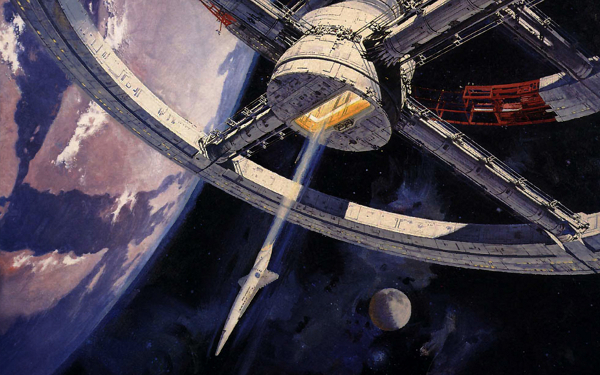
You are correct, Paul. Spending time with both stories there is the distinct feeling that they are part of a whole. One of the many reasons is that they both take place on a space station, although that is less obvious beyond the simple telling in “Immersion”. It was interesting re-reading “Immersion” after “On a Red Station, Drifting” as I was able to visualize Longevity Station and its heirarchy much more clearly.
I’m interested in the timelines in these stories, here most recent story in Clarkesworld included, and will ask her about this in the interview she agreed to participate in for SF Signal (which reminds me that I need to read her first interview today and get questions sent out to her).
I’m very impressed with this “new” group of short story writers who are cropping up repeatedly in the various short fiction outlets and Aliette de Bodard has quickly become a new favorite for the many intriguing aspects of her writing, including the world building that you mention.
The immerser concept is so intriguing, and I don’t think I’ve seen anything similar elsewhere. I love when sci fi authors comes up with something so foreign, and yet making perfect sense as an outgrowth of existing cultural concepts. What a very cool basis for a story.
It is, Cheryl. I’ve certainly seen other stories where some sort of technology interacts with the brain that way but to take the concept and use it as a way to try to mimic societal norms of the dominant culture is interesting. Scary, but interesting.
Wow! You really loved this story. I love the passion in your review. I read the story this week and missed several things in it that I enjoyed having pointed out to me as I read your review.
The bottom line for me is I just found the story ok. I will give you that it was interesting. The immersion experience I guess reminded me of Ready Player One so it didn’t seem that fresh of an idea to me. No fault of this story just my mind comparing to another recent work. I did find the cultural aspects of the interesting. I like your Google glass comparison as well.
I will be back next week for the next story though as I’m enjoying the stories. Take care.
Yes, there is something about her writing that is connecting with me in interesting ways. This story in particular had a lot to do with Agnes’ character and how close she was to a precipice of losing her identity and thus losing herself. I was also touched by her husband’s concern and desire to have her back. Despite be a Galactic himself he obviously chose her and I like to think that this was because of who she was, not who an immerser would cause her to be.
And at the risk of offending everyone by lumping multiple cultures under one heading, I’m interested in Asian culture, both contemporary and historical. The history is fascinating because of the amount of it there is. America’s history (in its current existence) is relatively brief and it is wild to think of the thousands of years of various dynasties that ruled and reigned in Eastern nations far, far back from America’s inception.
Glad you are reading along, have a good week my friend.
I enjoyed “Immersion” by Aliette de Bodard but I have a stylistic quibble. When the author resorts to the second person and addresses the reader as “you” I think that weakens the spell of the story. I’m not a fan of fiction written in the second person so this may just be my problem.
I actually don’t mind the second person perspective. I read Charles Stross’ novel Halting State a few years back that was written entirely this way and although it was jarring at first I quickly got used to it and it worked perfectly with the kind of story he was trying to tell.
In the case of “Immersion” I found that it provided a level of intimacy with Agnes’ character that made me feel a stronger connection with her plight and provided an easier contrast between her and Quy.
It is definitely just a difference in personal opinions and I love your “weakens the spell” quote especially because I had the opposite experience and felt like the use of that perspective with Agnes made me feel the spell she was under.
This sounds intriguing. In today’s world it’s hard to remain true to an identity on an individual and societal level. I feel like we are pulled in so many different directions and we lose sight of who we are.
Not that you need any more to read from my, TBM, but you should give this one a try. It is not too long and given your extensive travel I would be curious how a story like this resonates with you.